Deep Rock Galactic: Survivor
- 4.8
- Rating
- 1.00M
- Installs
- Free
- Price

 Analysis by App-foxy
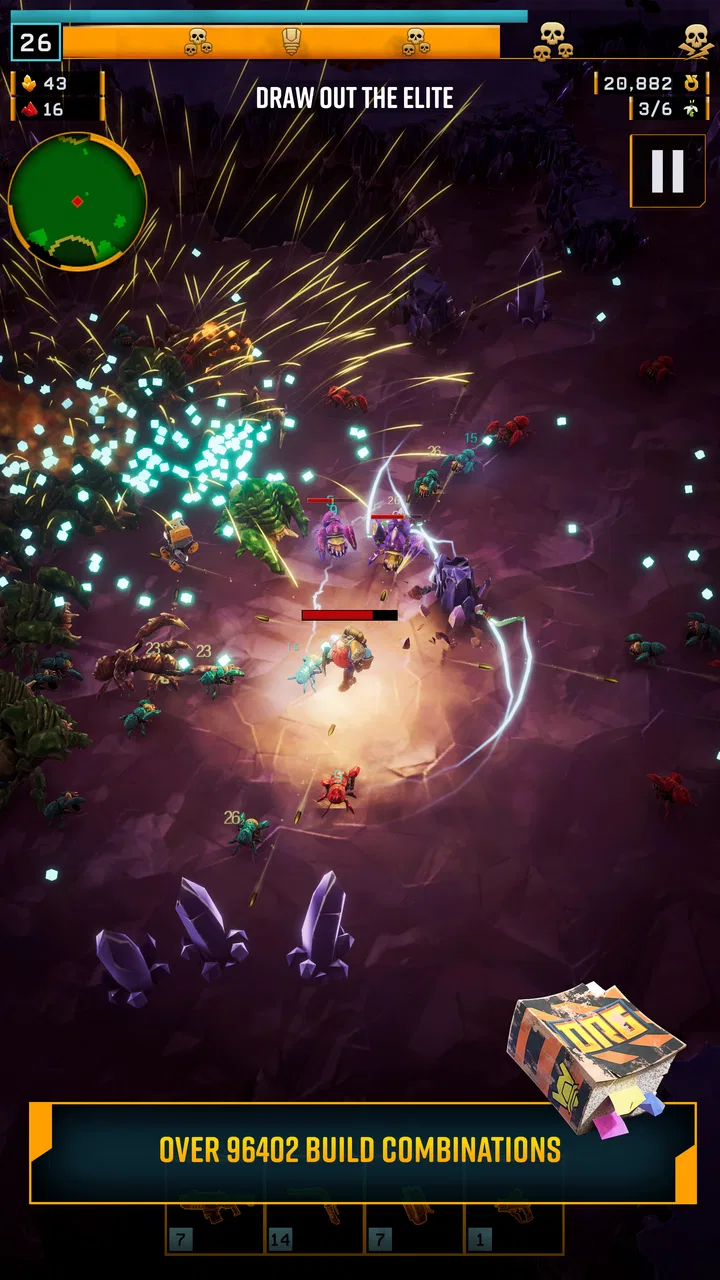
I went into Deep Rock Galactic: Survivor expecting a quick arcade distraction, but its first week surprised me. It takes the familiar Deep Rock Galactic setting and reshapes it into a solo roguelike reverse bullet hell, where the pressure comes from managing movement, upgrades, enemies, and positioning while your character’s attacks do much of the work. That makes it easy to start, yet much harder to master than the simple presentation suggests.
The game is free to try, which matters because its rhythm is built around short attempts rather than one long campaign session. I can play when I have a spare break, fail, learn something, and return later without needing to remember a complicated story. At the same time, it is not a passive idle game. I still need to watch the battlefield, choose sensible routes, and understand why a run went wrong.
Ghost Ship Publishing ApS is the developer, and the game sits in the arcade category. Its Teen content rating is a useful warning for families, especially because the screen can become busy and combat-focused. The current version is 1.0.9, and it runs on devices using Android 8.1 or later. On paper, those requirements make it approachable for many mobile players, although the real experience still depends on how comfortably a particular phone handles a crowded battlefield.
You May Also Like

 Pandora - Music & Podcasts
Pandora’s Music Is Easy to Start, but Harder to Recover
Pandora’s strength is its low-effort path from a seed to a station. Its weak spot is how much confidence it asks you to place in connection, setup, and quiet recovery.

 AccuWeather: Weather Radar
AccuWeather Review: A Quick, Clear Forecast for Everyday Decisions
For everyday plans, the best forecast is the one you can understand quickly. AccuWeather makes rain timing, radar, and local conditions easy to act on, with a few trade-offs.

 Hill Climb Racing
Why Hill Climb Racing Still Turns Crashes Into One More Run
A tiny car, a bumpy hill and one more upgrade: Hill Climb Racing keeps resurfacing because its simple chaos makes every near-miss feel personal.

 AliExpress - Shopping App
AliExpress Makes Global Shopping Feel Personal, but Shoppers Bear the Risk
AliExpress turns a global marketplace into a pocket-sized discovery engine. Its reach is useful, its shopping loop compelling, and its trade-offs easy to miss.

 Lords Mobile: Kingdom Wars
Lords Mobile Is a Kingdom-Building Routine, Not a Quick Match
A case-by-case verdict on the building, battles, device demands, and social commitments that make Lords Mobile rewarding for some players and exhausting for others.

 PDF Scanner app - TapScanner
TapScanner Makes Paperwork Easier to Capture, Check, and Share
TapScanner makes scanning with a phone feel less like a rescue operation and more like a dependable step in getting work done. Its capture tools are useful, though not flawless.
More From Our News Desk
View All News


Why the first week feels so satisfying
The strongest part of my early experience was the clarity of the basic loop. I enter a dangerous area, move through waves of hostile creatures, collect useful rewards, and make choices that shape the run. The character keeps attacking while I concentrate on survival and development. That creates a pleasant split in attention: my hands focus on movement, while my decisions determine whether the build becomes reliable or collapses under pressure.
This reverse bullet hell format feels different from a conventional arcade shooter. In a usual shooter, aiming is the main skill. Here, movement and anticipation matter more. I often found myself planning several seconds ahead, leaving room for an escape route instead of chasing every reward immediately. That trade-off is one of the game’s best lessons: a tempting pickup is not valuable if reaching it places me inside a dangerous crowd.
The first sessions also make experimentation feel worthwhile. I can try an aggressive approach, then switch to something more defensive after seeing where the run breaks down. Instead of judging a failed attempt only by its result, I started treating it as a short test. Did I move too close to the edge of the screen? Did I spend too much time collecting rewards? Did I choose an upgrade that looked powerful but did not help against the enemies appearing later?
That kind of self-correction is the main source of early appeal. The game does not need a large amount of explanation to become interesting. I learn by playing, and each mistake gives me a practical reason to change my next attempt. For a friend who enjoys arcade games with light strategy, this is much more inviting than a system-heavy title that explains everything before allowing the first meaningful action.
There is also a useful sense of tension in the way the screen fills. At the beginning of a run, I have enough space to think. Later, the same arena can feel completely different because enemies limit the safe routes around me. The best moments are not simply the most chaotic ones; they are the moments when I notice a narrow opening, commit to it, and survive by moving before the danger becomes obvious.
My practical advice for a first-week player is to resist the urge to judge a build by its damage alone. A weapon or upgrade that appears impressive may not solve the problem of being surrounded. I had better results when I considered how an option worked with my movement habits and the shape of the battlefield. If I tend to panic and turn sharply, I need choices that forgive that behavior rather than amplify it.
The game is also a good fit for short, repeatable sessions. A realistic use case is a commute or a waiting room: I can begin a run, focus on it for a while, and stop when the attempt ends without feeling that I abandoned a long narrative chapter. It is less suitable when I want a relaxed game to play while distracted, because the later stages punish casual attention.
Its popularity suggests that this first-week hook is reaching players. The game has a 4.5 average from around 21 thousand ratings, with roughly 1.1 thousand written reviews and over 500 thousand installs. Those figures do not replace personal experience, but they do show that the format has found an audience beyond a tiny group of genre specialists.
What keeps the loop useful after the novelty
The important question is whether the game remains interesting after the first surprise fades. In my experience, the answer depends on whether I enjoy improving decisions rather than simply unlocking new content. The excitement of seeing the screen become chaotic does not last forever. What lasts longer is the challenge of making a run more consistent and understanding why a previous strategy stopped working.
That makes the game closer to a practice-based arcade title than a traditional adventure. I do not return because I need to discover a dramatic plot twist. I return because I believe I can make a better route, choose a better combination, or survive a situation that defeated me earlier. Players who enjoy that kind of incremental learning are likely to find recurring value here. Players who need constant narrative surprises may feel the loop becomes familiar quickly.
A useful monthly habit would be to play with a specific question instead of repeating the same attempt without reflection. I might decide to improve crowd control, test whether a defensive choice gives me more room, or concentrate on avoiding unnecessary risks. This turns each session into a small experiment. It also prevents the common roguelike problem of making random choices and blaming bad luck when the result is unclear.
I found that the game rewards recognizing patterns in my own behavior. If I always rush toward rewards, the problem may not be the available upgrades. If I keep dying while trying to rescue a run, the better solution may be leaving a reward behind. These are not flashy features, but they create long-term value because they give me something concrete to improve every time I play.
The comparison with ordinary bullet hell games is important. Traditional examples often focus on memorizing attack patterns and performing precise evasive movement. This game adds build decisions to that pressure, so the result is more forgiving in some moments and more demanding in others. A strong setup can reduce the burden of aiming, but it cannot rescue careless positioning forever. I appreciate that balance because it gives strategic choices a real purpose.
Compared with other survivor-style arcade games, the Deep Rock Galactic identity gives the experience a stronger sense of place, but the lasting appeal still comes from the run structure. The setting may attract fans who already know the franchise, while the solo format makes it easier to approach without coordinating with friends. That is a meaningful distinction for someone who likes the universe but wants a self-contained mobile session rather than a multiplayer commitment.
The free entry point is another practical advantage. I can find out whether I enjoy the reverse bullet hell structure before committing money. However, the game includes in-app purchases priced from $4.99 to $14.99 per item. I would treat those purchases as optional spending and first decide whether the core loop genuinely fits my habits. Paying does not solve the central question of whether I enjoy repeating runs and learning from failure.
One subtle strength is that the game can serve different moods. On one day, I can play experimentally and accept a messy result. On another, I can approach a run with a clear plan and try to execute it cleanly. That flexibility helps the game stay useful in short bursts. It is not only a challenge title; it can also be a compact way to reset my attention, provided I am willing to stay engaged with the screen.
Where maintenance becomes part of the experience
Every repeatable game asks for a little maintenance from the player, and here that maintenance is mostly mental rather than administrative. I need to remember what I was testing, notice which choices are helping, and avoid falling into automatic habits. The game is easy to reopen, but that does not mean every session will feel fresh. The freshness comes from having a reason to play differently.
For me, the best routine is to stop after a meaningful attempt instead of forcing several tired runs. When I continue after losing concentration, movement becomes careless and decisions become random. Because the game depends on positioning, fatigue has a direct effect on performance. A short break can be more useful than immediately spending another session repeating the same mistake.
Device comfort also matters. A crowded arcade battlefield demands visual attention, and a small screen can make it harder to distinguish safe space from danger when many objects overlap. I would recommend playing with the display clean and the phone held in a way that leaves the movement area unobstructed. This is not a game I would choose while walking, multitasking, or trying to watch something else at the same time.
The minimum operating system of Android 8.1 keeps the entry barrier relatively modest, but compatibility is only the starting point. Older hardware may offer a less comfortable experience when action becomes dense, and mobile controls always feel more personal than a simple specification can show. If a player is sensitive to crowded visuals or prefers precise physical controls, a larger screen or another platform may be a better choice.
Maintenance also means managing expectations around progression. The game’s appeal is not that every session produces a spectacular new event. Some attempts will feel ordinary, and some will end because I made a small positional error. I have to accept that repetition is part of the design. If I need a steady stream of new locations, characters, or story scenes, this may not provide the kind of ongoing variety I am looking for.
On the other hand, the low-friction format makes it easier to maintain a casual habit. I do not need to schedule a group, remember a long quest chain, or rebuild my understanding after a week away. I can return and immediately focus on the next run. That is one reason I see it working well for players who want a dependable arcade game rather than a major time-consuming hobby.
What can cause fatigue over repeated runs
The biggest risk is repetition without a personal goal. Once I understand the basic rhythm, the visual chaos alone is not enough to carry every session. If I keep choosing the same comfortable approach, the game can begin to feel like a routine rather than a challenge. The solution is not necessarily more content; it is changing how I evaluate a run and what I am trying to improve.
Another source of fatigue is the tension between control and automation. The attacking system reduces the need for constant aiming, which is convenient on a phone, but it also means I have fewer direct actions to perform. Some players will enjoy concentrating on movement and decisions. Others may miss the satisfaction of manually targeting every threat. I would skip this game if the main reason I play arcade shooters is the feeling of precise, continuous aiming.
Failure can also feel frustrating when I cannot immediately identify the cause. A crowded screen may make it difficult to tell whether I lost because of a poor upgrade, a bad route, or a moment of slow reaction. I learned to replay the final part of a run in my head and identify the first avoidable mistake, rather than focusing only on the final defeat. That habit makes the difficulty feel more constructive.
The Teen rating is worth considering for younger players and for anyone seeking a calm, family-friendly experience. The game’s focus is survival under pressure, and its visual intensity may not suit every audience. It is not the right recommendation for a child who needs a gentle puzzle game or for someone who wants a quiet experience before sleep.
There is also a social trade-off. The Deep Rock Galactic name may suggest a shared cooperative adventure to players familiar with the wider franchise, but this particular game is built around solo play. That is a strength when I want independence, yet a weakness when I am specifically looking for teamwork, conversation, and the unpredictability of human partners. In that situation, a cooperative alternative would be the better choice.
I would also avoid treating purchases as a shortcut to enjoyment. Since the core appeal comes from learning the loop, spending money before knowing whether I like the format would be backwards. The free version gives enough of an opportunity to make that decision. If the repeated runs already feel like work, an additional purchase is unlikely to fix the underlying mismatch.
My long-term verdict for different kinds of players
After looking past the initial novelty, I think Deep Rock Galactic: Survivor earns lasting space for a specific kind of player: someone who likes compact solo runs, enjoys learning from failure, and prefers movement and build decisions over manual aiming. Its strongest quality is not endless surprise. It is the way a short attempt can reveal one clear lesson and make the next attempt feel purposeful.
I would recommend it to a fan of arcade games who wants more depth than a simple score chase, and to Deep Rock Galactic followers who are happy to experience the setting in a different format. It is especially practical for people who play in small pockets of time and want a game that can be resumed without a large mental commitment. The free price makes trying it straightforward, while the Teen rating helps set the right expectations about its tone.
I would be more cautious with players who need a strong story, multiplayer teamwork, exact manual shooting, or constant novelty. They may enjoy the first sessions but lose interest once the basic rhythm becomes familiar. Likewise, anyone who dislikes repeated failure should know that the game asks for patience. The point is not to win every attempt immediately; the point is to gradually understand the decisions that make survival more likely.
My most useful recommendation is to play deliberately. Keep an eye on escape space, do not chase every reward, and judge upgrades by how they support survival rather than how impressive they look in isolation. When a run fails, identify the first decision that created the problem. Those three habits reveal much more of the game than simply playing faster.
The current version, 1.0.9, gives the game a clear point of reference for anyone installing it now, but my judgment rests mainly on the structure of the experience: it is a focused arcade roguelike that can become a regular habit when I approach it as a skill-building game. It does not need to replace every other title on my phone. It only needs to be the game I open when I want a demanding, self-contained run.
Overall, I see it as a worthwhile free game with real replay value, but not a universal recommendation. Its lasting strength comes from the combination of solo accessibility, shifting battlefield pressure, and decisions that become clearer through practice. Its lasting weakness is the same loop can wear thin if I play without a goal. For me, that is a fair trade-off: when I want a quick arcade challenge that rewards attention, it deserves a place on my device.
FAQs for Deep Rock Galactic: Survivor
01What is Deep Rock Galactic: Survivor about?
Deep Rock Galactic: Survivor is an action-packed survival game where players take on the role of dwarven space miners. You must explore procedurally generated caves, mine valuable resources, and fend off hordes of alien creatures. The game offers a unique blend of cooperative gameplay and strategic resource management, all set in a dynamic and hostile environment.
02Is Deep Rock Galactic: Survivor a multiplayer game?
Yes, Deep Rock Galactic: Survivor is designed with multiplayer in mind, allowing you to team up with up to three other players. This cooperative aspect is crucial, as teamwork is essential for overcoming the challenges posed by the game's deep caverns and alien threats. However, it can also be played solo if you prefer.
03What platforms is Deep Rock Galactic: Survivor available on?
Deep Rock Galactic: Survivor is available on both Android and iOS platforms. The game is optimized for mobile devices, ensuring smooth gameplay and intuitive controls. Check your device's compatibility before downloading to ensure the best experience possible. A stable internet connection is recommended for multiplayer sessions.
04Are there in-app purchases in Deep Rock Galactic: Survivor?
Yes, Deep Rock Galactic: Survivor offers in-app purchases. These typically include cosmetic items, resource packs, and character upgrades. While these purchases can enhance your gaming experience, they are optional and not necessary to enjoy the full scope of the game. Players can progress and enjoy the game without spending money.
05How does the progression system work in Deep Rock Galactic: Survivor?
The progression system in Deep Rock Galactic: Survivor is based on completing missions, gathering resources, and upgrading your gear. As you advance, you can unlock new abilities and equipment for your characters. Success in missions rewards you with experience points and currency, which are used to enhance your mining and combat capabilities.
Pros
- Engaging co-op gameplay experience
- Diverse and unique character classes
- Rich
- immersive underground environments
- Challenging missions with dynamic objectives
- Regular updates with new content
Cons
- Steep learning curve for newcomers
- Occasional server connectivity issues
- Limited solo play enjoyment
- Can be repetitive over time
- High system requirements for mobile devices

Deep Rock Galactic: Survivor
Gallery